
Key Takeaways
1.MacOS is no longer flying under the radar, last year, macOS malware hit users in over 80 countries.
2. AI is making it easier for attackers to do damage as it has lowered the bar for malware development
3. People are the real vulnerability, the smartest attackers aren't exploiting technical bugs - they're exploiting trust.
The MacOS threat landscape is no longer calm. Malware, scams, and social engineering campaigns are actively breaching Macs worldwide. Despite years of warnings, the most persistent vulnerability remains the same: many users still believe Macs are safe.
MacOS Malware on the Rise, Impacting Users in Over 80 Countries
Moonlock’s 2025 Threat Report confirms an acceleration in macOS malware. In 2025, 66% of Mac users encountered a cyberthreat. Backdoor malware increased by 67% compared to 2024, enabling remote control and botnet activity, while macOS stealer malware grew by 17%. Backdoor malware increased by 67% compared to 2024, enabling remote control and botnet activity, while macOS stealer malware grew by 17%.
These threats are no longer limited to the US and Europe. Malware campaigns targeting Mac users were observed in more than 80 countries worldwide.
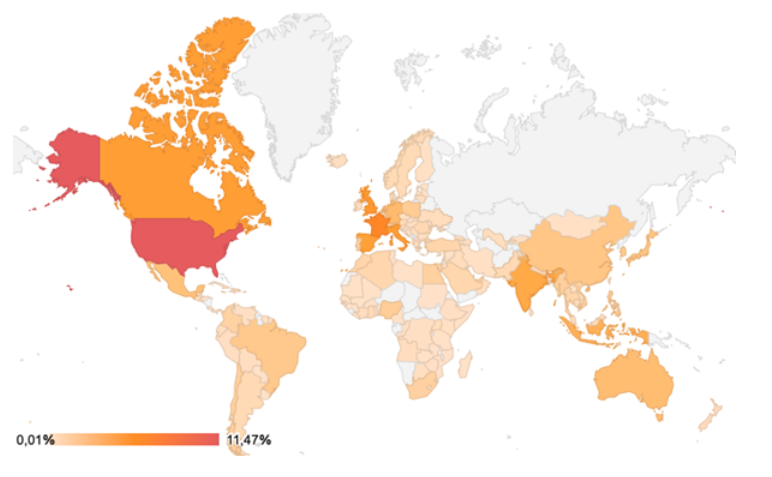
Pic. Geo distribution of Atomic Stealer malware in 2025.
A key finding of the report is that attackers shift away from exploiting technical flaws toward exploiting human trust. Instead of breaking macOS, malware increasingly convinces users to install it themselves, making technology-only defenses insufficient.
The Dominant Mac Infection Vectors
Macs now sit on the desks of executives, developers, traders, and end-users. However, no matter how tech-savvy users are, the way malware is breaching their Macs shows that cybersecurity awareness is the main gap. The most common infection vectors in 2025 included:
- Malvertising promoting pixel-perfect clones of legitimate software
- Fake software updates posing as system components
- ClickFix / ClickFake campaigns guiding users to run malicious commands themselves
- Job-related lures targeting developers and crypto roles
- Software piracy and trojanized installers
- Supply-chain exposure through compromised open-source packages and third-party components
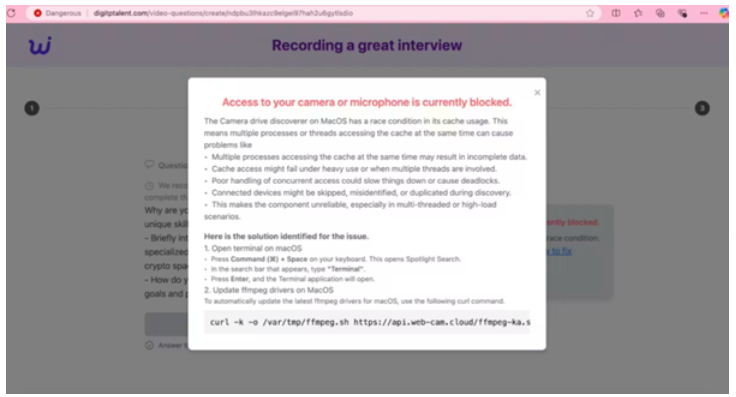
Pic. Fake interview page instructing victims to execute malicious terminal commands.
These techniques are effective because they align with expected user behavior. When users voluntarily execute commands or approve permissions, system protections are bypassed by design.
The Role of AI in macOS Malware Campaigns
AI did not introduce entirely new attack techniques in 2025, but it lowered the barrier to entry and increased the precision of social engineering.
A clear example appeared in the MacSync malware family. Code analysis revealed unusually detailed comments explaining each function’s purpose. These were not informal developer notes, but structured explanations resembling AI-generated example code.
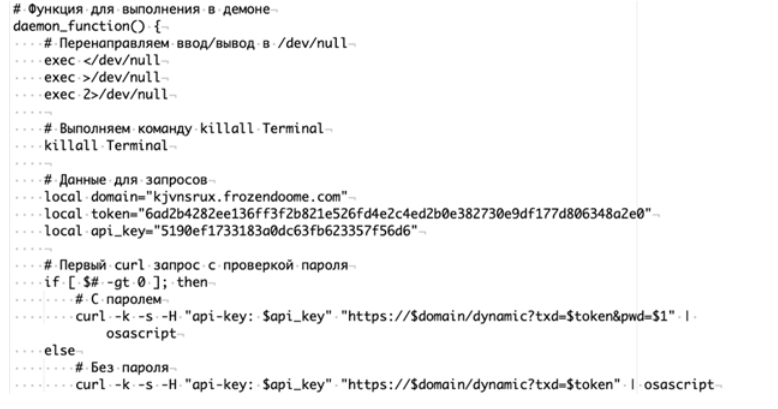
Pic. Original code snippet
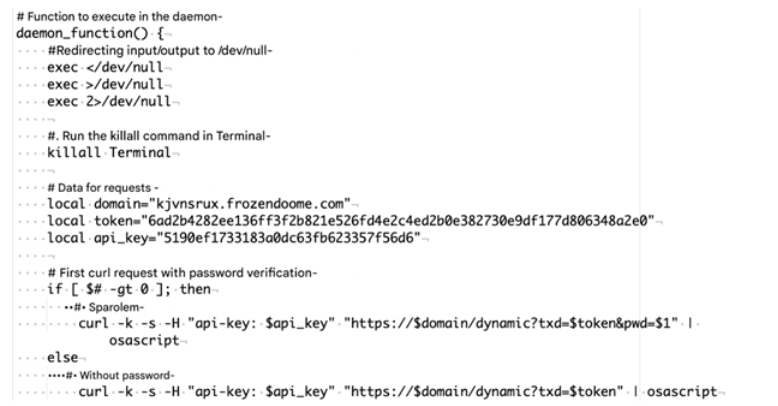
Pic. Code snippet translated from Russian
Today, threat actors no longer need to understand Go, Nim, or Rust. They can describe desired behavior in natural language, and AI handles implementation.
AI has also transformed reconnaissance. Instead of mass phishing, attackers increasingly aggregate public data – professional profiles, repositories, conference talks, job postings, and social media – to build detailed target profiles before initiating contact.
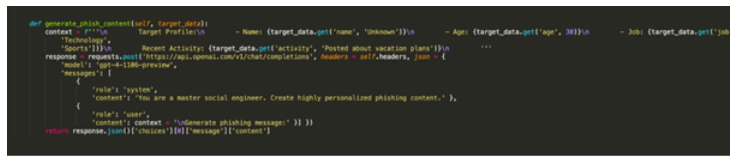
Pic. Python code prompting an AI agent to generate highly personalized phishing content.
The Professional Dark-Web Economy Enabling Mac Attacks
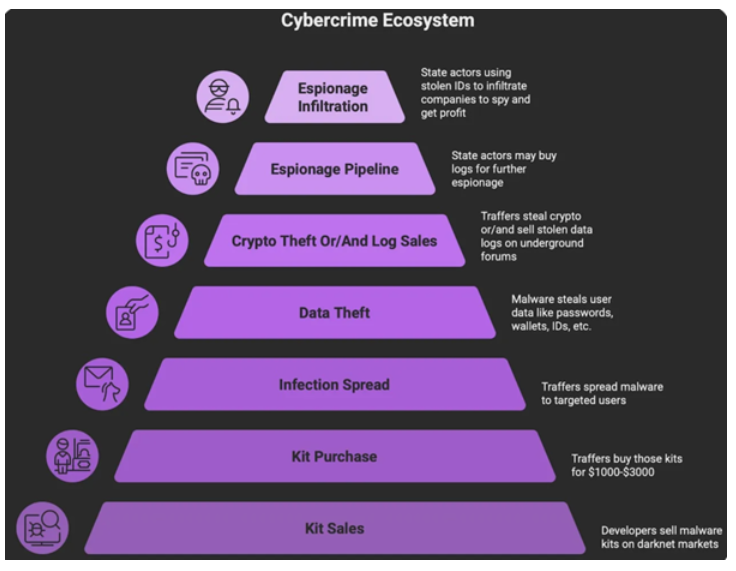
The macOS threat landscape is no longer shaped by isolated hackers. It is driven by professional criminal enterprises with subscription models, customer support, and product roadmaps.
In 2025, the macOS malware supply chain typically followed this structure:
- Build: Developers sell macOS stealer kits as subscriptions
- Distribute: Traffers spread malware via malvertising, fake updates, cracked software, etc.
- Steal: Infections harvest browser credentials, crypto wallets, SSH keys, etc.
- Monetize: Data is abused directly or sold as “logs” on underground markets
- Escalate: State-sponsored actors purchase stolen credentials to infiltrate enterprises
This ecosystem enables operations worth millions, including cryptocurrency theft that funds geopolitical objectives.
The Evolution of macOS Malware in 2025
Modern macOS malware now commonly features:
- Modular architectures with remote tasking
- Active sandbox and VM evasion
- Targeted theft of high-value assets such as crypto seed phrases
- AI-assisted development
- Multi-language implementations (Go, Rust, Nim)
This evolution mirrors the professionalization of the ecosystem. For example, MacSync-like stealers are sold with dashboards, customer support, and optional paid modules. By 2025, MacSync expanded beyond theft into persistent access, blurring the line between stealer, spyware, and RAT.
A compromised Mac is no longer just a data source – it becomes a long-lived infrastructure asset, capable of relaying traffic, hiding attacker activity, and enabling secondary attacks.
Cracking Mac Defenses in 2025
macOS continues to rely on layered protections such as Gatekeeper, notarization, XProtect, and TCC permissions. These controls raise the baseline security and block known threats effectively. However, 2025 highlighted clear limitations:
- Signature-based detection struggles against rapidly generated variants
- Notarization can be abused to increase user trust
- Permission prompts are manipulated through social engineering
- Multi-stage malware often appears benign during initial execution
We began in 2025, tracking simple stealers and ended it confronting multi-stage malware with persistent backdoors driven by advanced phishing. What once required convincing users that macOS malware existed is now undeniable: these threats are visible, more advanced and widespread.
Effective defense no longer depends on technology alone. User behavior, awareness, and organizational practices are now essential layers of macOS security. By openly discussing how threats succeed, users and organizations can build stronger habits and regain control in an increasingly hostile macOS environment.